

Picture this: all your essential business tools – from sales and accounting to inventory and marketing – all humming along together from a single, central hub. That’s the magic of an Open ERP Odoo system. It’s a true all-in-one platform that demolishes the walls between your departments and brings everything into one unified, efficient operation. Ready to see how?
Why Australian SMEs Are Choosing Open ERP Odoo
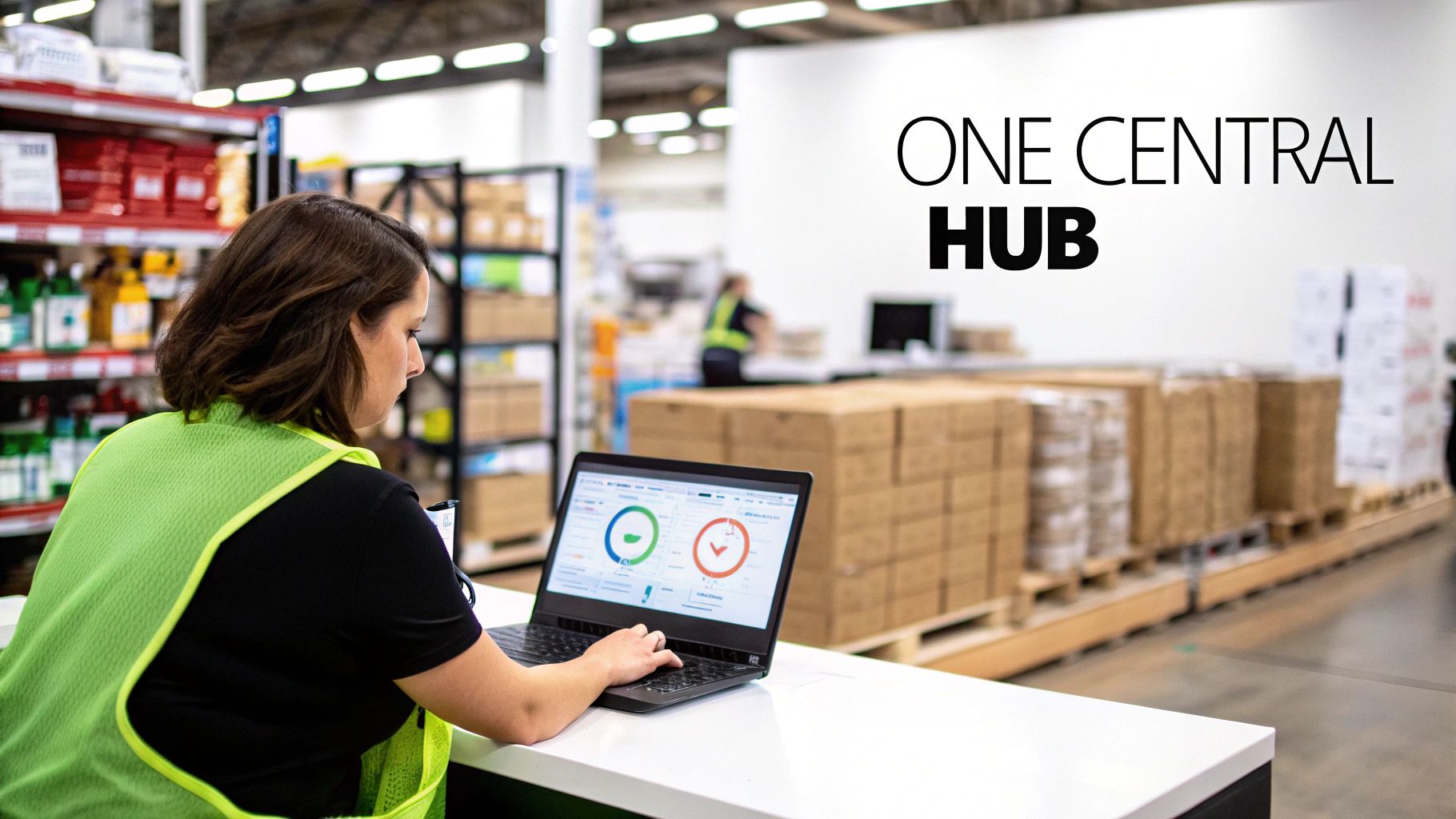
For any growing Australian SME, juggling separate systems for every part of the business is a recipe for chaos. You’ve probably felt the pain: one bit of software for your sales team, another for the bookkeeper, and a totally different one for the warehouse. This kind of setup inevitably leads to endless manual data entry, costly mistakes, and a frustrating blind spot when you need to see the whole picture.
The Open ERP Odoo platform was built from the ground up to fix this very problem. Think of it as the central nervous system of your business. Instead of juggling a dozen disconnected apps, Odoo gives you a suite of integrated modules that speak the same language. This means when a sale is made, your inventory is updated instantly, the accounting entry is created, and the customer’s record is updated – all automatically, without anyone lifting a finger.
A Flexible Alternative to Rigid Systems
Let’s be honest, traditional ERP systems are often rigid, eye-wateringly expensive, and designed for massive corporations. They’re just not a realistic fit for most SMEs. Odoo flips this model on its head with its modular, open-source approach, which gives Australian businesses two massive advantages:
- Scalability: You can start lean with just the modules you need right now, like CRM and Invoicing. Then, as your business expands, you can simply add more tools like Manufacturing, Project Management, or eCommerce without the headache of migrating to a new system.
- Cost-Effectiveness: Its modular nature means you only pay for what you actually use. This makes it a powerful, budget-friendly alternative to those bloated legacy systems packed with features you’ll never touch.
Practical Case: A retail business in Sydney was constantly battling inventory discrepancies between their physical store and their WooCommerce website. After implementing Odoo, they synced their stock levels in real-time. Now, when an online order comes through, the stock is immediately updated in their point-of-sale system, which has stopped them from overselling and dramatically improved customer satisfaction.
This kind of adaptability is what makes a customised Odoo implementation in Sydney or Adelaide such a powerful strategic move. It gives you the tools to automate your workflows, make smarter decisions based on real data, and truly unlock sustainable growth. Whether you’re starting from scratch or need ongoing software development in Sydney Adelaide, a well-planned Odoo solution can be the foundation your business needs to thrive.
If you’re ready to stop juggling systems and start building a more connected, efficient business, our team can show you what’s possible with Odoo. Let’s chat about a solution that’s built for you. Contact Wistec today for a free consultation.
The Journey from TinyERP to a Global Platform
To really get a feel for what makes an Open ERP Odoo system so powerful, you have to look at where it came from. This wasn’t some project cooked up overnight in a corporate boardroom. It all started back in 2005 with a small, open-source project in Belgium called TinyERP, driven by a single vision from its founder, Fabien Pinckaers: to make great business software accessible to everyone.
That initial commitment to open-source was the secret sauce. As more features were added, the project was renamed OpenERP, a nod to its bigger ambition of taking on the expensive, closed-off systems that dominated the market. It quickly caught fire, with developers and businesses from all over the world jumping in to contribute code, fix bugs, and build new functionality. This community-driven approach is what gives Odoo its incredible flexibility today.
From OpenERP to Odoo
The final big shift happened when OpenERP became Odoo. This wasn’t just a name change; it signalled that the platform had grown far beyond a traditional ERP. It now covered everything from website building and eCommerce to marketing automation, becoming a complete, all-in-one business toolkit.
Practical Case: An Adelaide manufacturing firm might have started with the old OpenERP to manage its stock and production lines. When they decided to sell directly to consumers online, they didn’t need a complicated Shopify implementation. They just activated Odoo’s eCommerce module, and instantly, their factory floor was connected to their online shop, providing real-time production and stock data to customers. It’s that seamless.
This evolution from a passion project to a global powerhouse trusted by millions speaks volumes about its stability. For Australian businesses looking at an Odoo implementation in Sydney or Adelaide, that history should give you real confidence. You’re not just buying software; you’re plugging into a mature, battle-tested platform that’s built to scale right alongside you.
Ready to see how this powerful, evolved platform can fit your business? Our experts in software development in Sydney and Adelaide can design a solution that works for you, whether you’re integrating with WooCommerce or launching a new online store. Contact Wistec to discuss your project.
How Odoo Modules Actually Unify Your Business
The true magic of an Open ERP Odoo system isn’t just the sheer number of features it offers. It’s how all those features talk to each other, creating one smooth, automated workflow. Don’t think of Odoo as a box of separate tools; see it as a single, connected brain for your entire operation, designed to kill manual data entry and give you one version of the truth.
Let’s get practical. Imagine a customer in Adelaide buys something from your WooCommerce store. In a disconnected business, that simple purchase sets off a clumsy chain reaction. Someone has to manually spot the order, update an inventory spreadsheet, alert the warehouse to pack and ship, and then nudge the bookkeeper to send an invoice. It’s slow, messy, and a breeding ground for mistakes.
This infographic shows just how far the platform has come, evolving from a small-scale tool into the comprehensive business suite it is today.
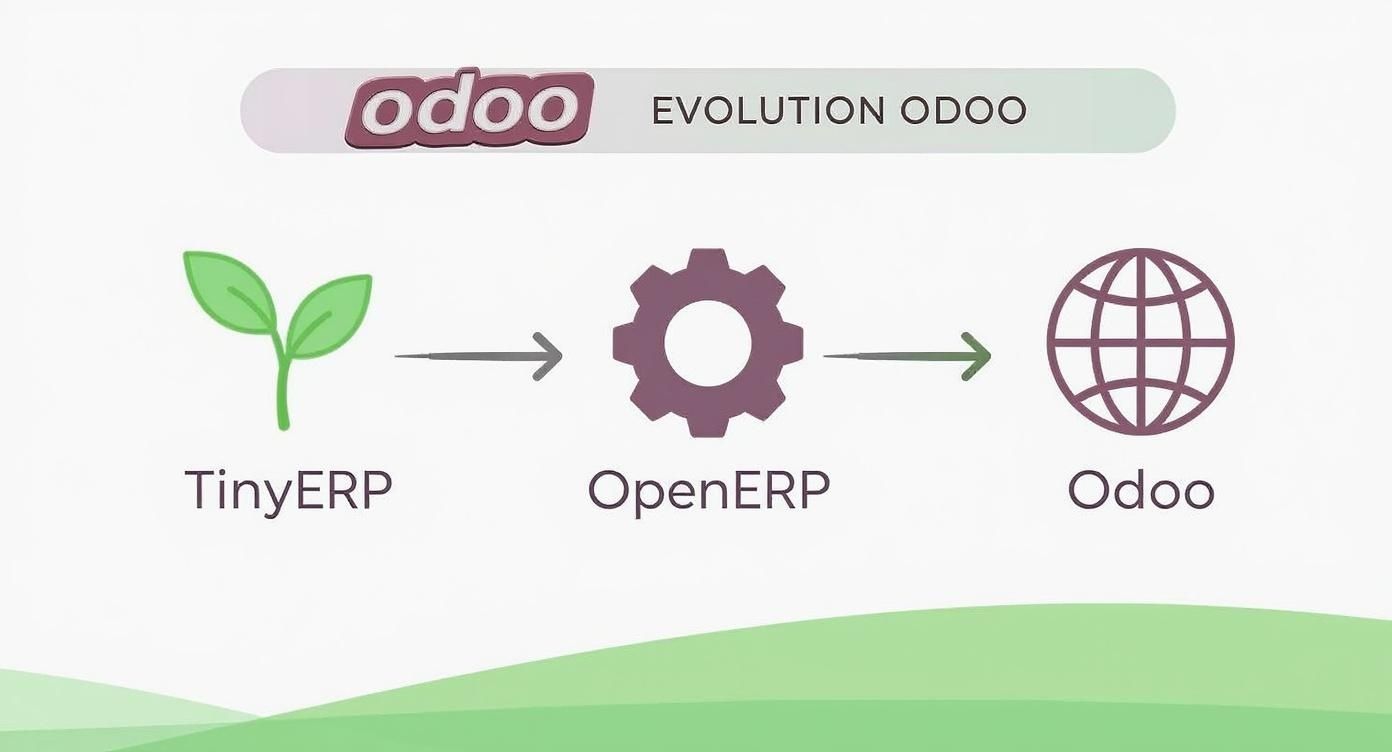
This journey from TinyERP to Odoo really drives home its core philosophy: continuous improvement and integration. That’s why it’s such a powerhouse today.
From a Simple Click to Cash in the Bank
With Odoo, that entire manual process just… happens. Automatically. The WooCommerce order instantly triggers a domino effect across Odoo’s core modules:
- Sales & CRM: A sales order is created on the spot. The customer’s details and purchase history are instantly logged in the CRM, giving your sales team a complete picture of every interaction without lifting a finger.
- Operations (Inventory): The Inventory app immediately adjusts your stock levels. No more guesswork. If stock drops below a set threshold, it can even automatically generate a purchase order to your supplier.
- Finance (Accounting): An invoice is generated and emailed to the customer. The payment is tracked, and your books are updated. The entire accounts receivable process runs on autopilot.
This kind of seamless flow is precisely why Odoo adoption among Australian SMEs has skyrocketed, with its user base jumping by over 300% in the last three years. Businesses are flocking to its modular design and affordability, which lets them start small and scale up without paying for features they don’t need. You can find more insights on the top ERP systems in Australia to see how it stacks up.
To better understand how these modules are structured, here’s a quick breakdown of some key apps and what they do.
Odoo Modules by Business Function
| Business Function | Key Odoo Modules | Primary Purpose |
|---|---|---|
| Sales & Marketing | CRM, Sales, Website, eCommerce, Email Marketing | Managing customer relationships, processing sales orders, and running marketing campaigns. |
| Operations | Inventory, Manufacturing (MRP), Purchase, Project | Handling stock control, production planning, procurement, and managing projects from start to finish. |
| Finance | Accounting, Invoicing, Expenses | Overseeing financial records, managing customer and vendor bills, and tracking employee expenses. |
| Human Resources | Employees, Recruitment, Payroll, Time Off | Managing employee data, hiring processes, payroll, and leave requests. |
This table just scratches the surface, but it shows how Odoo provides dedicated tools for nearly every department, all designed to work together from a central database.
Practical Examples for Sydney & Adelaide Businesses
The benefits aren’t just for eCommerce stores. A smart Odoo implementation in Sydney can solve real-world problems for all sorts of businesses.
Practical Case: Think about a local Sydney manufacturing firm. An order comes in, and the Manufacturing module instantly checks the Bill of Materials (BOM), confirms raw materials are in stock, and schedules the job on the workshop floor. Every single step is tracked, giving them crystal-clear visibility from the initial order right through to dispatch.
This integration is just as crucial for service-based companies. An Adelaide consulting firm, for instance, can use Odoo to track project hours, manage client tasks, and automatically bill for time spent. It connects their service delivery directly to their bottom line, eliminating lost revenue and administrative headaches.
Whether you’re after a custom Shopify implementation or need expert software development in Sydney to link your existing tools, the objective is always the same: create one unified system where information flows freely. By bringing all your operations under one roof, Odoo gets rid of the bottlenecks holding you back and gives you the clarity to make smarter, faster decisions.
Ready to see how a tailored module setup could transform your operations?
Speak to our Odoo experts today and let’s design your unified workflow.
What Are the Real-World Business Benefits of Odoo?
Bringing a system like Odoo Open ERP into your business isn’t just a tech project; it’s a direct investment in how well your company runs, grows, and ultimately, profits. The true payoff isn’t the software itself, but the tangible results you’ll see on the ground. For Australian businesses, this often means significant cost savings compared to older, clunkier systems, a newfound ability to adapt quickly, and the power to make sharp decisions backed by unified, real-time data.
The Australian ERP market is definitely heating up, with forecasts expecting it to hit USD 1,170.6 million by 2030. In such a competitive space, Odoo has carved out a niche as the go-to for SMEs looking for a solution that’s both powerful and affordable. Its modular design and open-source core make it a serious player for any business with its eyes on growth. You can get a better sense of Odoo’s rise in the Australian market to see the impact it’s having.
From Inventory Chaos to Healthy Profits: A Real-Life Example
Let’s make this concrete. Picture a retailer in Sydney trying to keep track of stock between their physical shop and a separate WooCommerce website. It’s a constant headache. They keep selling items online that have just sold out in-store because the two systems don’t talk to each other. This leads to unhappy customers, cancelled orders, and endless manual stocktakes. Their books are a jumble of spreadsheets, and they have no real idea which products are actually making them money.
This is where a smart Odoo implementation in Sydney changes everything:
- One Source of Truth for Inventory: The second an item is sold in the shop, the stock count on their WooCommerce site updates automatically. No more overselling, no more disappointed customers.
- Accounting on Autopilot: Sales from the shop and the website instantly create invoices in Odoo’s accounting module. This frees up countless hours of manual data entry and gives them an up-to-the-minute look at their cash flow.
- Decisions Backed by Data: With all their sales information in one place, they can finally see which products deliver the best margins. This insight lets them focus their purchasing and marketing budgets where they’ll get the biggest bang for their buck.
Practical Case: This isn’t just about making things tidier; it’s about fundamentally boosting profitability. By fixing the stock management mess and automating the financial grind, the business directly improves its bottom line and frees up cash to invest back into growth. An Adelaide-based distributor used this exact strategy to reduce inventory carrying costs by 15% in their first year.
This story is all too common for businesses trying to juggle a patchwork of separate tools. Whether you’re looking for a clever Shopify implementation or need specialised software development in Sydney or Adelaide to link up your current platforms, the objective is always the same. Putting money into a system like Odoo isn’t just another business expense—it’s the clearest route to building a smarter, more efficient, and more profitable operation.
Ready to see how this could work for your business?
Talk to a Wistec expert today to map out your path to greater efficiency.
Your Roadmap to a Successful Odoo Implementation
Deciding to bring a powerful system like Open ERP Odoo into your business is a fantastic move. But let’s be honest, the software itself is only half the battle. A truly successful project comes down to a smart, well-thought-out strategy. Without a clear plan, even the most capable tools can miss the mark, leading to blown budgets and frustrating delays.
Think of it like building a house. You wouldn’t just start laying bricks without a detailed blueprint, right? The same logic applies here. Your implementation roadmap is that blueprint. It ensures every single stage, from the initial brainstorming to the final launch, is locked into your business goals. This approach turns what could be a messy tech project into a clear and predictable journey.
The Critical Discovery and Planning Phase
The most important work happens long before anyone touches the software. This initial discovery phase is all about getting under the hood of your business and understanding how things really work. What’s running smoothly? Where are the frustrating bottlenecks? Which manual tasks are sucking up your team’s valuable time?
A proper analysis means mapping out your current workflows—everything from how a sales lead turns into a happy customer, to how you manage stock for your WooCommerce or Shopify store. This isn’t just about ticking boxes; it’s about pinpointing the exact pain points that Odoo is going to solve for you.
Practical Case: A classic project killer is “scope creep”—when new features get tacked on randomly. A solid plan is your anchor. For an Adelaide services company, this meant defining that Phase 1 must include project management and invoicing, while advanced HR features would wait for Phase 2. This kept the initial Odoo implementation in Adelaide on track and on budget.
Choosing the Right Partner and Managing the Transition
Once you have your blueprint, the next step is finding the right people to help you build it. Partnering with a local expert for an Odoo implementation in Sydney or Adelaide can make all the difference. They bring more than just tech skills; they understand the Australian business landscape, from local compliance rules to market quirks. This is especially true if you need specialised software development in Sydney Adelaide to connect Odoo with other unique systems.
The implementation itself breaks down into a few key stages:
- Data Migration: This is the delicate process of moving your customer, product, and financial history into Odoo. Clean data is the bedrock of a good ERP.
- Strategic Customisation: It’s about making Odoo’s modules fit your specific workflows, not forcing your team to change how they work to fit the software. The system should support your unique business logic.
- User Training: Getting your team comfortable and confident with the new system from day one is absolutely vital for user adoption and getting a return on your investment.
This need for detailed, expert-led planning helps explain Odoo’s growing popularity here. In the competitive space for ERP advertising in Australia, Odoo.com pulled in a significant 10.16% share of all clicks, second only to the big market leaders. It shows that more and more Aussie businesses are actively looking for Odoo solutions. You can discover more insights about ERP market share to see the trends for yourself.
A successful transition is about more than just technology; it’s about guiding your people through the change. By following a structured roadmap, you can ensure your Open ERP Odoo project doesn’t just go live—it thrives.
Ready to build a personalised implementation plan that guarantees ROI? Speak with our Wistec software development experts today.
Got Questions About Odoo? We’ve Got Answers
Stepping into a new business management platform like Odoo always brings up a few questions. It’s a big decision, after all. To help you get a clearer picture, we’ve put together straight-up answers to the most common queries we hear from Australian business owners just like you.
What’s the Real Difference Between Odoo Community and Enterprise?
Think of it like this: Odoo Community is the powerful, open-source engine. It’s completely free and packed with all the core modules you need to run a business. If you have a solid tech team in-house and love to tinker, it can be a fantastic starting point.
Odoo Enterprise is the fully-loaded, commercially supported version built on top of that same engine. It’s a paid subscription, but it adds a whole layer of advanced features that most growing businesses find essential. We’re talking about things like a complete Australian accounting suite with BAS reporting, smarter inventory tools, and more advanced manufacturing controls. Crucially, the Enterprise version also includes unlimited support directly from Odoo and seamless, automatic upgrades, giving you peace of mind and professional backing for the long haul.
Can Odoo Talk to My Shopify or Xero Account?
Absolutely. This is one of the things Odoo does best. It’s built to be the central hub of your business, not another siloed piece of software. It comes with ready-made connectors for major platforms like Shopify and WooCommerce, pulling all your orders, customer details, and stock levels into one single, reliable place.
Now, when it comes to accounting, Odoo’s own module is more than capable of replacing systems like Xero or MYOB entirely. In fact, keeping everything in one system is often the most efficient way to go. But if you’re not ready to make that switch, a good software development Sydney Adelaide team can build a solid integration to keep the data flowing smoothly between your tools.
Do I Really Need a Partner to Implement Odoo?
Technically, no. You could go it alone. But honestly, bringing an expert partner on board is probably the single biggest predictor of a successful project. A local partner who specialises in Odoo implementation Sydney Adelaide knows the ins and outs of the Australian business landscape—from our specific tax rules to common industry practices.
Practical Case: An expert partner does so much more than just install the software. They become your strategic guide. For one Sydney client, this meant identifying a crucial workflow gap that standard modules couldn’t fix. Our software development Sydney team built a small, custom app within Odoo that saved them 10 hours of manual work per week. This partnership saves you from costly mistakes down the line, gets you a return on your investment faster, and ensures you have support when you need it most. It turns a daunting tech project into a genuine business win.
How Does Odoo Pricing Work for Aussie Businesses?
Odoo’s pricing is refreshingly straightforward and built to grow with you. You pay a monthly subscription for each user, plus a fee for the specific apps you decide to switch on.
This “pay-for-what-you-need” model makes it a lot more cost-effective than old-school ERPs that lock you into bloated packages full of features you’ll never touch. The cost of implementation with a partner is a separate, one-off investment. This will naturally depend on how complex your project is, from a basic Shopify implementation sync to a full manufacturing workflow. We always recommend getting a detailed quote that breaks everything down so there are no surprises.
Ready to see how a properly set-up Odoo system could drive your business forward? The team at Wistec is here to guide you through every step, from the first conversation to full implementation and ongoing support.