

Are you tired of jumping between different apps just to manage sales, track inventory, and handle your accounts? It’s a common headache for Australian SMEs. This constant switching between disconnected systems creates friction, slows down your team, and ultimately costs you opportunities. Imagine a world where all those tools talk to each other seamlessly. That’s precisely what Odoo delivers – a single, unified platform designed to run your entire business.
Why Odoo Is a Game Changer for Australian Businesses

Think of your current software setup. You probably have one tool for sales, another for accounting, and maybe a third for keeping track of stock. Each one does its job, but getting them to work together is a manual, time-consuming nightmare. It’s like having a separate remote control for your TV, your soundbar, and your streaming box – clumsy and inefficient.
Odoo Australia replaces that pile of remotes with one smart, universal controller for your entire business.
This is why so many Aussie businesses, from retailers in Sydney to manufacturers in Adelaide, are making the switch. Instead of wrestling with software that doesn’t communicate, they get a central hub where everything is connected. When a customer places an order online, your inventory is updated instantly, and the transaction pops up in your accounting records without anyone lifting a finger. This is the power of a truly integrated system: no more double-handling data and a crystal-clear view of your business in real-time.
To give you a clearer picture, here’s a quick breakdown of how Odoo’s core features translate into tangible benefits for local businesses.
Odoo at a Glance for Australian SMEs
| Feature | Benefit for Your Australian Business |
|---|---|
| Unified Platform | One source of truth. No more conflicting data between sales, stock, and finance. |
| Modular Design | Start small with what you need (e.g., CRM) and add more apps as you grow. |
| Australian Localisation | Handles GST, BAS reporting, and local payroll requirements out of the box. |
| Open Source Flexibility | Highly customisable to fit your unique business processes perfectly. |
| E-commerce Integration | Seamlessly connect your online store (Shopify, WooCommerce) to your backend. |
This table just scratches the surface, but it highlights the core principle: Odoo is built to adapt to your business, not the other way around.
A Platform That Grows With You
One of Odoo’s biggest strengths is that it scales alongside your ambition. You don’t have to buy a massive, overly complex system from the get-go. You can start with just the core apps you need today, like Sales and CRM, and then bolt on new functionality as you expand.
Thinking of launching an online store? A smooth WooCommerce or Shopify implementation can be plugged directly into your Odoo ecosystem. This modular approach makes it an incredibly cost-effective solution that won’t hold you back.
Odoo’s modular design and localisation capabilities have made it a dominant force in the Australian SME ERP sector. Its ability to streamline operations across sales, inventory, and HR is driving significant market share growth. You can explore more insights on its market presence with this in-depth analysis on Odoo in the Australian SaaS market.
Practical Cases Across Australia
This isn’t just theory; it’s happening in businesses right now.
- A retailer with a top-notch Odoo implementation in Sydney can manage stock levels across several physical stores and their website from a single screen. No more selling items you don’t have! This is a practical case where a business integrated its Shopify implementation directly with Odoo’s inventory module, ensuring real-time stock accuracy.
- A service-based firm in Adelaide can use custom software development in Adelaide to tweak Odoo’s project management and invoicing modules to match their exact workflows, saving hours on admin every week.
By bringing all your operations under one roof, Odoo doesn’t just help you manage your business—it gives you the foundation you need to grow it.
Ready to see how an integrated system could transform your day-to-day operations? Contact our experts today for a free consultation.
Getting Australian Compliance Right with Odoo
Let’s be honest, navigating Australia’s business regulations can feel like a full-time job in itself. Between GST, BAS reporting, and Single Touch Payroll (STP), keeping the Australian Taxation Office (ATO) happy is a huge pressure point for any business owner. This is exactly where having a system built for our local landscape really pays off.
Odoo isn’t just some generic ERP with a few Aussie features bolted on as an afterthought. Its accounting module is properly configured for Australian compliance from the ground up. It takes those mandatory, often mind-numbing, tasks and turns them into smooth, automated workflows. Just think about your GST calculations being handled automatically with every single sale and purchase, slashing the risk of a costly human mistake.
This deep localisation is what gives business owners real confidence. When your core system is built to align with ATO standards, you’re not just buying software; you’re buying peace of mind.
Key Compliance Features for Aussie Businesses
The real magic of Odoo Australia is how it automates the most critical financial jobs. Instead of drowning in manual data entry and wrestling with spreadsheets, the platform does the heavy lifting, freeing up your team to focus on growing the business.
Here’s what it handles for you:
- Goods and Services Tax (GST): Odoo automatically applies the correct GST rates to your transactions. This makes calculating your Business Activity Statement (BAS) incredibly simple and accurate.
- Single Touch Payroll (STP): The system reports all your payroll information directly to the ATO after each pay run. No extra steps, just seamless compliance with STP requirements.
- BAS Reporting: Odoo generates the reports you need in a format that mirrors the BAS form, making lodgement quicker and far more reliable.
This built-in support means less time buried in compliance paperwork and more time spent actually running your business.
By automating these core compliance tasks, Odoo helps businesses sidestep the common traps that lead to ATO audits and penalties. It turns financial management from a reactive, stressful chore into a proactive, controlled part of your operation.
A Practical Case for Integrated Accounting
So what does this look like day-to-day? A practical case is a retail business killing it with their Shopify implementation. They can connect their online store directly to Odoo. When a sale comes through, Odoo instantly records the revenue, calculates the GST, and updates the financial ledgers. All in real-time.
Or think about a services firm that’s had an Odoo implementation in Sydney. They can manage everything from project billing to employee wages right in the system. Odoo makes sure all payroll data—super, tax, the lot—is correctly processed and reported via STP. For businesses with really specific needs, custom software development in Adelaide can even tweak Odoo to handle niche industry rules.
This level of integration means no more manually reconciling sales figures from platforms like WooCommerce or Shopify with a separate accounting package. That alone saves countless hours and ensures your data is always spot-on.
Ready to simplify your compliance and get back to what you do best? Speak with an Odoo expert today and discover how we can shape a solution for your Australian business.
The Core Odoo Modules That Power Your Growth
So, how does a platform like Odoo actually help you grow your business? It all comes down to its core modules. Think of them as powerful building blocks that connect every part of your operation, turning isolated tasks into one smooth, automated workflow.
We’re not just talking about a list of features here. Let’s look at how these modules genuinely work together for Australian businesses, connecting everything from the first “hello” with a customer to the final numbers on your balance sheet. This tight integration is Odoo’s secret sauce—it’s what turns the software into a real engine for growth.
Starting with Revenue: CRM and Sales
Every business journey begins with a customer. Odoo’s Customer Relationship Management (CRM) module acts as your command centre, giving you a crystal-clear view of every lead, opportunity, and client conversation. It empowers your sales team to track their pipeline and build stronger relationships, from the initial chat right through to closing the deal.
Once that lead says “yes,” the Sales module steps in. It makes creating professional quotes and sales orders incredibly simple. Picture this: a customer accepts your quote. With a single click, that quote becomes a sales order, which then automatically kicks off a chain reaction across the rest of your business, alerting your warehouse and finance teams instantly.
The Engine Room: Inventory and Accounting
This is where the real magic happens. Let’s take a practical case: you run a retail business with a popular Shopify store and a physical shopfront in Sydney.
- A customer orders online: The sale from Shopify instantly feeds into Odoo’s Inventory module.
- Stock levels update in real-time: The system automatically deducts that item from your stock count. This means you’ll never have to deal with the headache of selling something you don’t actually have.
- An invoice is created: The Accounting module generates a customer invoice, calculating and applying the correct GST.
- Everything is recorded: The sale is posted straight to the right accounts in your general ledger.
This entire process—from sale to stock to accounting—flows seamlessly without anyone needing to lift a finger for manual data entry. It’s a perfect example of how a well-planned Odoo implementation in Sydney or Adelaide can wipe out human error and free up hundreds of hours. You get to focus on strategy, not paperwork.
And this isn’t just for e-commerce platforms like Shopify or WooCommerce. The same integrated workflow applies to every sale you make, whether it’s through Odoo’s Point of Sale (POS) in-store, a direct B2B order, or any other channel you use.
It’s no surprise this unified approach is gaining serious traction in the Australian market. Odoo has already captured a 10.16% share of clicks in the competitive ERP space, putting it right up there with the big legacy players. This shows just how well it resonates with local businesses. You can dive deeper into Odoo’s market positioning in Australia here.
For companies with specific needs, Odoo’s flexibility is a game-changer. If an off-the-shelf module doesn’t quite match your unique process, custom software development in Sydney Adelaide can mould the platform to your exact requirements, ensuring every part of your business is perfectly in sync.
Ready to see how these modules can harmonise your operations? Talk to our experts today to schedule a personalised demo.
Connecting Odoo with Your Favourite Tools
Bringing a new system into your business shouldn’t mean throwing out everything that’s already working. A common worry I hear from business owners is the thought of abandoning the tools and platforms they’ve come to rely on. The good news? With Odoo Australia, you don’t have to. Odoo is built to be the central nervous system of your operation, linking up with and boosting the tools you already use every day.
Think of Odoo as the conductor of an orchestra, not a replacement for your star musicians. It’s not here to take over your successful online store; it’s here to plug directly into it. This creates a powerful, unified back-end that handles everything from inventory and orders to customer data, all from one spot. It’s this ability to connect the dots that takes a good business setup and makes it truly exceptional.
Seamless E-commerce Integration
For any Aussie business, a solid online store is non-negotiable. Odoo really shines here, connecting smoothly with the big names in e-commerce to make sure your online and offline worlds are perfectly in sync.
- Shopify Implementation: Running a Shopify store? Odoo can hook right in. When a customer clicks ‘buy’, the order instantly appears in Odoo, your stock levels adjust automatically, and an invoice is ready to go—no manual data entry required.
- WooCommerce Integration: If you’re on WordPress, a slick WooCommerce connection means all your web orders flow straight into your ERP. This makes processing, shipping, and balancing the books incredibly efficient.
This live data sync is a game-changer. It means you can finally stop worrying about accidentally overselling a hot product and start getting a clear, accurate picture of your business performance in one place.
The point of integration isn’t to replace what’s working—it’s to make it work better. By connecting a platform like Shopify to Odoo, you build a single source of truth. This empowers you to make smarter decisions on everything from restocking popular items to planning your next marketing push.
A Practical Case from Sydney
Let’s picture a practical case of a growing fashion retailer in Sydney. They’ve got a fantastic online store built on Shopify and a couple of busy physical boutiques. Before Odoo, managing their stock was a chaotic mess of spreadsheets and crossed fingers. It was a constant battle, often ending with unhappy customers when an item they bought online was actually out of stock.
After an expert Odoo implementation in Sydney, their whole operation came together.
- Centralised Inventory: Odoo became the one and only source of truth for all their stock. It didn’t matter if a dress sold online or in-store; the inventory count was updated everywhere, instantly.
- Automated Fulfilment: Online orders from their Shopify implementation flowed straight into Odoo’s warehouse module. This kicked off a smooth, automated process for picking, packing, and shipping.
- Unified Customer View: Customer details from online sales and in-store loyalty sign-ups were all pulled together in Odoo’s CRM. This gave them a 360-degree view of their customers, opening the door for smarter marketing and personalised service.
And for those unique business challenges? That’s where custom software development in Sydney Adelaide comes in. A skilled team can build custom connectors for your specific payment gateways, local shipping carriers, or any other niche software you rely on, making sure Odoo fits your business like a glove.
Ready to stop juggling systems and create a single, powerful command centre for your business? Get in touch with our integration experts today for a free chat.
Your Odoo Implementation Success Plan
Getting your Odoo system up and running is more like building a custom home than flipping a switch. You need a solid blueprint, the right materials, and a skilled crew to bring it all together. Jumping into an Odoo Australia rollout without a clear plan is a recipe for missed deadlines, blown budgets, and a system that just doesn’t feel right. A well-thought-out implementation, on the other hand, turns your new ERP into a powerhouse for your business, not another complicated problem.
This roadmap will walk you through the journey in clear, manageable steps. We’ll cover everything from the initial planning and discovery sessions right through to getting your data across, customising the fit, and making sure you have the support you need when you go live.
From Discovery To Deployment: A Phased Approach
Every great project starts with a deep understanding of what you’re trying to achieve. A good implementation partner doesn’t just install software; they roll up their sleeves and get to know your business inside and out. They’re looking for the bottlenecks, the frustrations, and the hidden opportunities to make things run better.
A typical implementation journey follows a few key milestones:
- Discovery & Analysis: This is the foundation. Your partner will map out your current workflows, pinpoint the exact pain points, and define the scope of the project. No guesswork allowed.
- Configuration & Customisation: This is where Odoo is shaped to fit your business rules. Sometimes it’s a matter of standard configuration, but other times it requires specific software development in Sydney Adelaide to handle your unique processes.
- Data Migration: All your crucial data—customers, products, sales history—is carefully cleaned up and moved into its new home in Odoo.
- Testing & Training: The system is put through its paces to make sure everything works perfectly. Then, your team gets hands-on training so they feel confident and ready from day one.
- Go-Live & Support: The switch is flipped! Your partner sticks around to iron out any kinks and ensure everyone adopts the new system smoothly.
Following a structured process like this means nothing gets missed. It’s how you build a system that’s not only powerful and reliable but also perfectly in sync with your business goals from the get-go.
Practical Cases Of Odoo Implementation
So, what does this look like in the real world? Here are some practical cases.
Imagine a growing service-based business in Sydney that’s losing its grip on project profitability and tracking billable hours. An expert Odoo implementation in Sydney would zero in on the Project and Timesheets modules. They’d build a seamless flow that takes them all the way from quoting a new job to sending the final invoice, with perfect clarity at every stage.
Or think about a manufacturer in Adelaide struggling with clunky, inefficient production scheduling. A partner focused on Odoo implementation in Adelaide would deploy the Manufacturing (MRP) module. This would help them organise their production line, manage complex bills of materials, and give them a real-time view of what’s happening on the workshop floor. These aren’t just software installs; they’re targeted solutions to real business headaches.
A successful implementation is less about the technology itself and more about the strategic partnership behind it. The right partner acts as a guide, navigating the technical complexities so you can focus on running your business.
This visual shows just how smoothly data can flow in a properly integrated system, connecting a sale from your website directly into your core Odoo operations and payment systems.
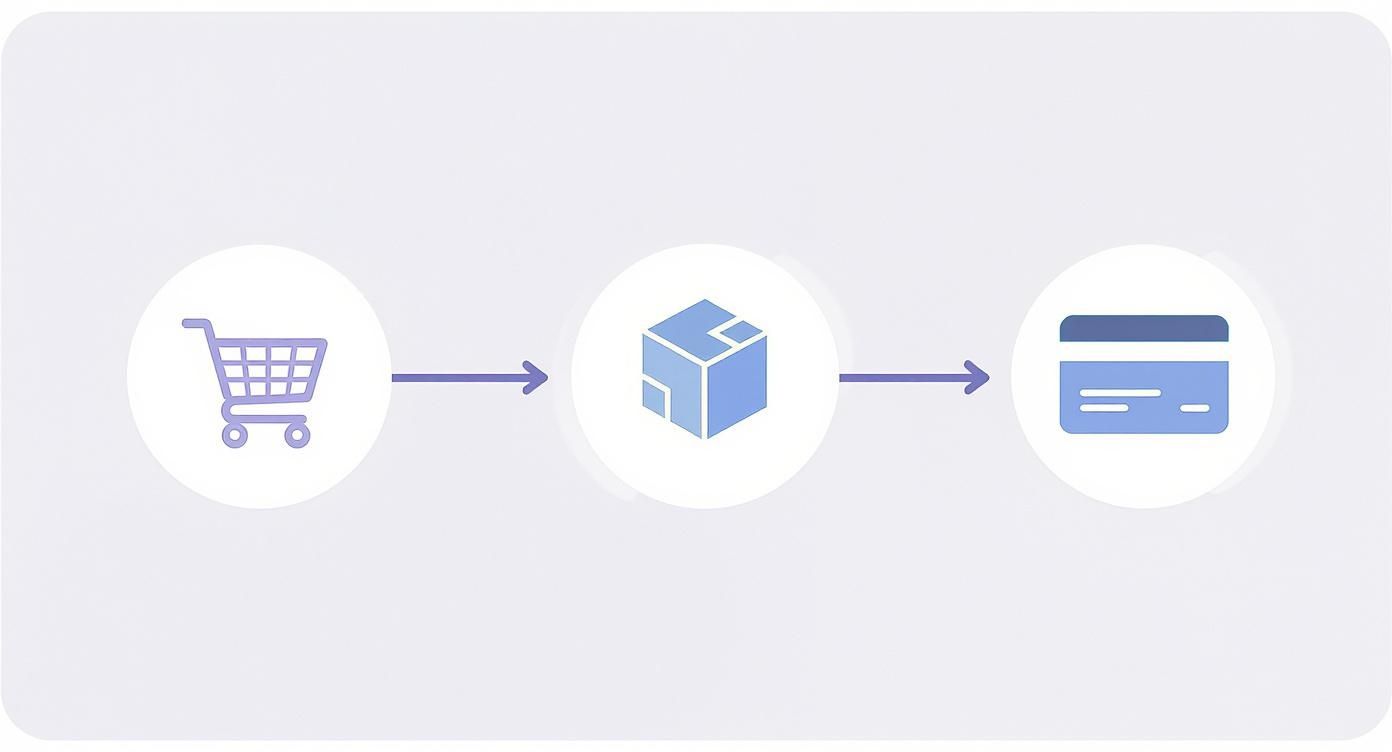
The real magic here is automation. By connecting your online store, whether it’s a Shopify implementation or built on WooCommerce, you kill off manual data entry for good and ensure everything is accurate across the board.
Deciding between going it alone and bringing in an expert is a major first step. This table breaks down what each path looks like.
Choosing Your Odoo Implementation Path
| Factor | DIY Approach | Certified Odoo Partner |
|---|---|---|
| Expertise | Relies on internal knowledge, which may be limited. Steep learning curve. | Deep, hands-on experience with Odoo’s modules and best practices. |
| Time to Value | Significantly longer. Internal teams must learn, plan, and execute from scratch. | Faster rollout. They’ve done this before and know how to avoid common pitfalls. |
| Customisation | Limited to what can be achieved out-of-the-box or with basic apps. | Capable of complex custom development to perfectly match unique business needs. |
| Risk | High risk of configuration errors, budget overruns, and failed adoption. | Mitigates risk through a proven methodology, project management, and expertise. |
| Ongoing Support | Support is self-managed, relying on community forums or limited direct support. | Provides dedicated, ongoing support, training, and strategic advice post-launch. |
While a DIY approach might seem tempting to save on initial costs, partnering with a certified expert provides the strategic guidance and technical skill needed for a truly successful, long-term result.
Ready to build your implementation blueprint? Contact Wistec today to discuss a success plan tailored to your Australian business.
Your Odoo Australia Questions, Answered
Thinking about Odoo for your Australian business? You’ve likely got a few questions buzzing around. Let’s tackle the most common ones we hear from business owners, giving you the straight answers you need to move forward with confidence.
What’s the Real Cost of Odoo Implementation in Australia?
This is the big one, and the honest answer is: it depends. The cost for an Odoo implementation in Sydney or anywhere else in Australia isn’t a one-size-fits-all number. It hinges on the complexity of your business, how many people will be using it, and the amount of custom work needed.
A practical case: a small business with straightforward needs might get started for a few thousand dollars. On the other hand, a larger company requiring deep customisation and specialised software development in Sydney Adelaide could be looking at an investment in the tens of thousands. The best way to think about it isn’t as a cost, but as an investment in making your business run smoother and preparing it for future growth.
The key takeaway? Always get a detailed, itemised quote from a certified Odoo partner. This makes sure there are no surprises and that the plan is perfectly aligned with what your business actually needs.
Can Odoo Really Replace Xero or MYOB?
Yes, it absolutely can. Odoo’s Accounting module isn’t just a basic add-on; it’s a comprehensive, ATO-compliant powerhouse built to completely take the place of standalone systems like Xero or MYOB. It manages all your core financial tasks, from invoicing and expense claims right through to your BAS and Single Touch Payroll (STP) reporting.
The real magic, though, is how it connects everything. When your accounting is part of the same system as your sales, inventory, and projects, you get a single, unified view of your company’s financial health. No more exporting CSVs or trying to reconcile data between two different platforms.
Is Odoo a Good Fit for My Specific Industry?
Chances are, yes. Odoo’s strength lies in its incredible adaptability. It’s used across a huge range of Australian industries—from retail and manufacturing to professional services and e-commerce. The modular design is a game-changer because you only implement (and pay for) the apps you truly need.
If you have a unique process that isn’t covered out of the box, Odoo’s open-source foundation means it can be customised to an incredible degree. Whether you need an expert for a Shopify implementation or require specific software development in Adelaide to nail your manufacturing workflow, Odoo can be moulded to fit your business like a glove. This flexibility is precisely why it’s become such a popular choice across Odoo Australia.
How Do I Choose the Right Odoo Partner in Australia?
This is probably the most important decision you’ll make in your entire Odoo journey. The right partner can mean the difference between a smooth rollout and a frustrating mess.
Your first stop should be Odoo’s official partner directory. Look for partners with a Gold or Silver certification who are based here in Australia.
Dig into their past work. Do they have practical cases from businesses like yours, perhaps in the same industry or city? When you talk to them, ask about their process, how they manage projects, and their experience with other platforms you use, like WooCommerce. A top-tier partner won’t just install software; they’ll act as a strategic guide, ensuring your Odoo implementation truly supports your business goals and delivers a fantastic return.
Ready to see how a unified, scalable system could reshape your business? At Wistec, we build practical Odoo solutions that deliver real-world results for Australian businesses. From custom implementations to flawless integrations with Shopify and WooCommerce, we’re here to help you grow.
Schedule your free consultation with a Wistec Odoo expert today!