

When it comes to the best restaurant POS systems, three names consistently top the list: Toast, Square, and Lightspeed. Each one acts as a command centre, tying together your orders, payments, and stock levels. Your best bet depends on what you value most—maybe it’s a free, yet surprisingly powerful, starting plan like Toast’s, or the famously simple and intuitive interface of Square. The right POS is the technological heart of any modern Aussie eatery, driving efficiency from the front door to the back office.
Ready to find the perfect POS for your restaurant? Contact Wistec today for a personalised consultation and discover how the right technology can elevate your business.
Choosing Your Restaurant’s Central Hub
Picking a Point of Sale (POS) system is one of the most important decisions you’ll make for your business. This goes way beyond just taking payments; it’s the central hub that connects your front-of-house, kitchen, and back-office operations into a single, smooth workflow. In a market this competitive, the right tech has a direct line to your profitability, your customers’ experience, and your ability to scale.
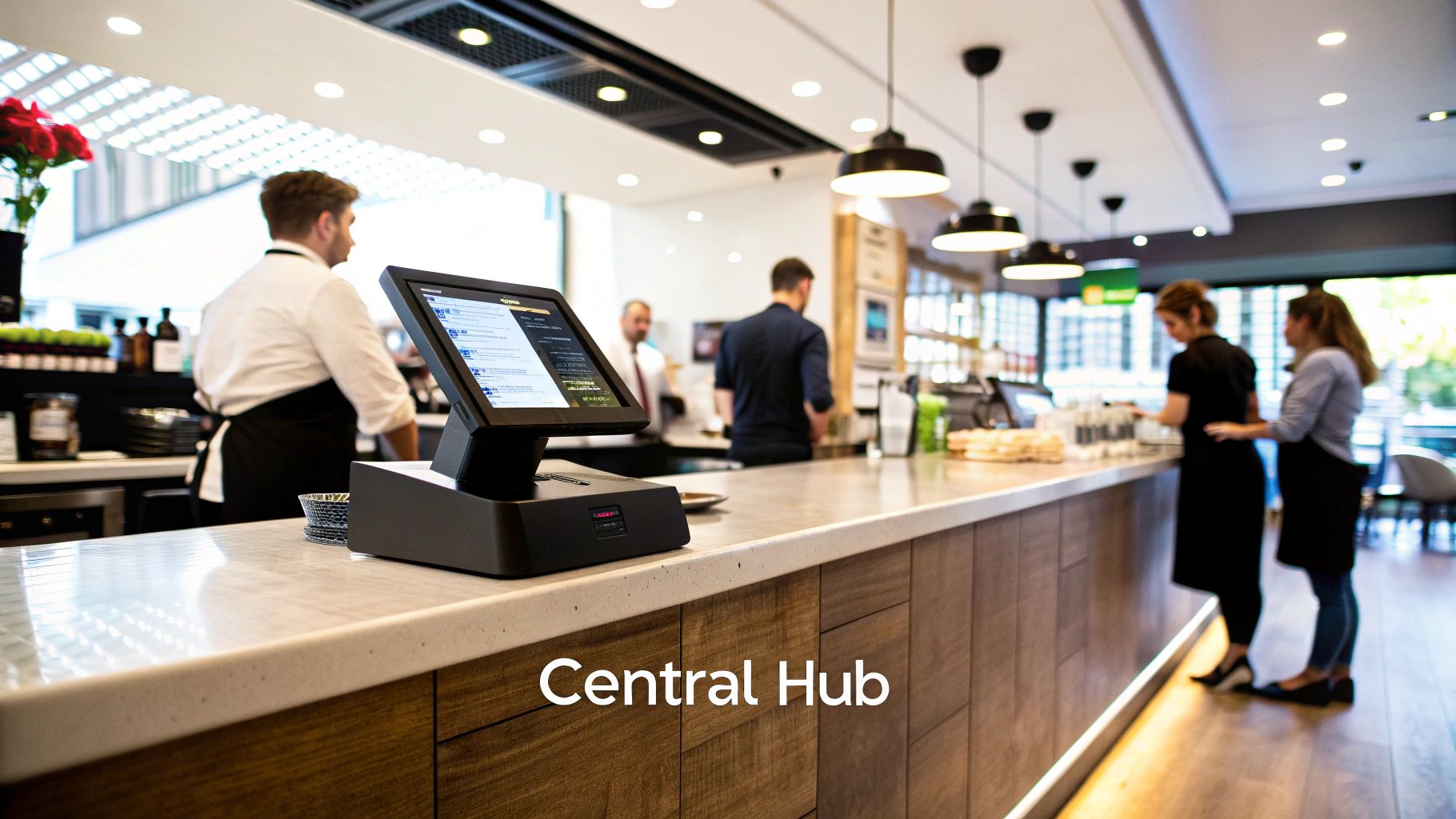
This guide is designed to cut through the marketing fluff and compare the top contenders, helping you make a decision that feels right for your venue. We’ll dig into the features that actually matter, look at them in real-world scenarios, and give you practical advice tailored to your needs.
Understanding the Market Growth
The Australian POS market is absolutely booming, thanks to the massive shift towards digital payments and the need for smarter operational tools. The market is currently valued at around USD 615.71 million and is on track to more than double, hitting a projected USD 1,258.11 million by 2030. This incredible growth just goes to show that a modern POS isn’t a ‘nice-to-have’ anymore—it’s essential for staying in the game. You can dig deeper into the Australian POS market trends to see why holding onto an old system is no longer a viable option.
Aligning Technology with Your Business Model
The way your restaurant runs will determine the tech you need. A bustling quick-service café has a completely different set of challenges than a fine-dining restaurant.
Think about these common situations:
- Practical Case: High-Volume Cafés: A busy Sydney café uses its POS for lightning-fast order entry and integrated payment devices for quick taps. A seamless link to their kitchen display system (KDS) keeps the morning rush moving accurately, reducing order mix-ups by over 15%.
- Practical Case: Full-Service Restaurants: A fine-dining spot in Adelaide relies on advanced table management to orchestrate the entire dining experience. They use easy split-billing options and robust staff management tools to coordinate everything from seating to final payment smoothly.
- Practical Case: Multi-Channel Operations: A venue that sells pantry items online needs a system that integrates perfectly with their e-commerce. A seamless Shopify implementation or WooCommerce connection is crucial for syncing inventory and sales data, preventing them from selling an item online that just sold out in-store.
The real aim is to find a system that not only fixes today’s headaches but also grows with you. It should support your future ambitions, whether that’s opening a second location or building out your online brand.
For those with truly unique workflows, a standard POS might not cut it. You might need to look at a custom solution, like an Odoo implementation in Sydney, Adelaide, or specialised software development in Sydney, Adelaide, to build the perfect operational backbone from the ground up.
Ready to find the perfect POS for your restaurant? Contact Wistec today for a personalised consultation and discover how the right technology can elevate your business.
What to Look for in a Modern POS System
Before we jump into comparing specific brands, let’s get on the same page about what separates a glorified cash register from a truly top-tier restaurant POS. These core features are the engine of your business, and getting them right has a direct impact on your efficiency, stress levels, and ultimately, your bottom line.
A high-performing system does so much more than just take payments. Consider the practical case of dynamic inventory management. A bar in Sydney uses its POS to track every spirit pour, automatically deducting from stock levels. This data helps them slash waste and pinpoint which high-profit cocktails to promote, boosting their margins. This isn’t just about avoiding the “we’re out of that” conversation; it’s about getting the hard data to perfect your menu costing.
Turning Data Into Smarter Decisions
Another absolute must-have is powerful reporting and analytics. A great POS takes all that raw sales data and turns it into genuine business intelligence. It should tell you, at a glance, which dishes are your profit powerhouses, when your peak hours really are, and who keeps coming back for more. That’s pure gold when you’re making decisions about menu changes, staffing, or marketing.
The modern Aussie restaurant also runs on a whole ecosystem of different tools, which is why flexible integration is so critical. Your POS needs to play nicely with all the other software you rely on.
- Accounting: A clean link to something like Xero automates your bookkeeping and saves you from hours of painful admin.
- E-commerce: If you sell merch or meal kits, a smooth connection to your Shopify implementation or WooCommerce site is essential for keeping inventory in sync.
- Online Ordering: Direct integration with delivery apps means no more staff fumbling to manually punch in Uber Eats orders during the middle of a frantic dinner rush.
Think of your POS as the central nervous system for your venue. It has to connect all the moving parts so they work together as one well-oiled machine. For unique setups, custom software development in Sydney Adelaide can be the answer to bridge any gaps.
Making Day-to-Day Operations Easier
Finally, you need features that genuinely simplify management. Things like integrated staff management for handling rosters, tracking labour costs, and setting user permissions are a game-changer. A built-in Customer Relationship Management (CRM) tool is also huge, helping you build a database of your regulars so you can create loyalty programs that actually work.
It’s no wonder that cloud-based systems have taken over, with around 87% of businesses now relying on them. This centralisation means a manager in Adelaide can check live sales figures at their Sydney restaurant without missing a beat, allowing for quick, informed decisions. You can read more about the rise of cloud-based restaurant software and how it’s changing the industry.
Ready to find a system that ticks all the right boxes for your venue? Speak to a Wistec expert today, and we’ll help you figure out exactly what you need.
Comparing The Top Australian POS Contenders
When you put the leading POS systems under a microscope, the differences that really matter for day-to-day operations start to show. We’re going to break down the industry big-hitters—Square, Lightspeed, and Toast—not just by what their brochures say, but how they actually perform in a real Australian cafe, a bustling quick-service takeaway, or a multi-venue restaurant group. It’s time to get past the marketing fluff and focus on what truly counts.
Our comparison is built around the crucial decision points you’ll face. We’re looking at everything from the initial hardware outlay and monthly software fees to the fine print on payment processing rates and, critically, how well each system can grow with you. After all, a POS that feels like a perfect fit today could easily become a roadblock to your expansion tomorrow.
This chart gives you a quick visual snapshot of key performance indicators that often distinguish one system from another, breaking down their strengths in inventory management, reporting, and their ability to connect with other software.
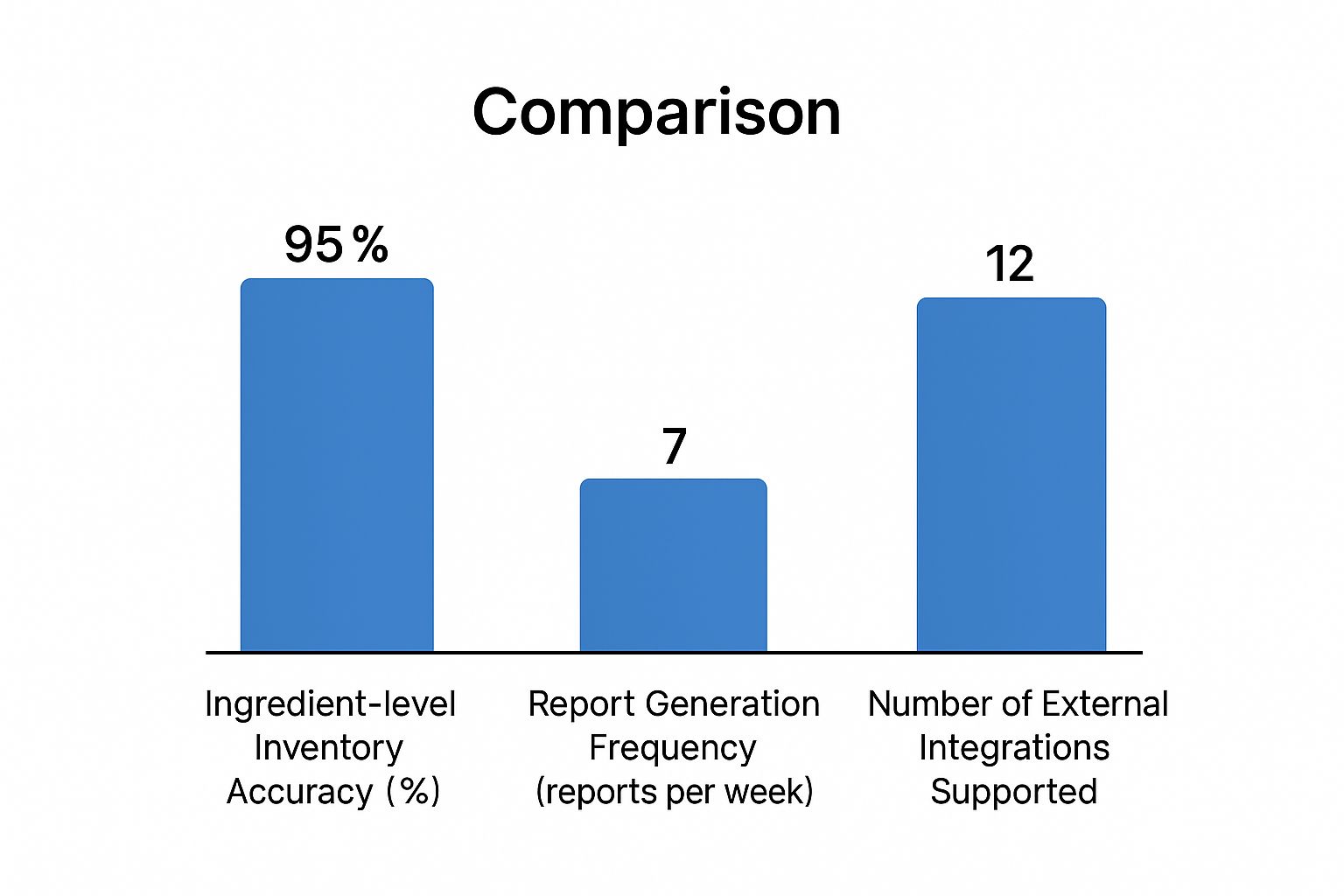
As you can see, the data reveals a classic trade-off. Some systems are masters of granular, real-time stock control, while others focus on building a huge library of third-party app integrations for ultimate flexibility. This is where you need to think hard about your business’s biggest priorities.
To help you weigh these options, here’s a side-by-side breakdown of the features that make a real difference.
Feature Breakdown of Leading Restaurant POS Systems
| Decision Criteria | Square for Restaurants | Lightspeed Restaurant | Toast POS |
|---|---|---|---|
| Pricing Model | Tiered plans, including a free option. Predictable transaction fees. Good for startups. | Subscription-based (monthly/annual). Tiers for different venue sizes. | Custom-quoted hardware and software bundles. All-in-one approach. |
| Hardware | Sleek, modern hardware (iPads, terminals). Can purchase piecemeal. | Offers both iPad-based and proprietary hardware bundles. Flexible options. | Durable, industry-specific proprietary hardware built for tough kitchen environments. |
| Key Features | Strong on QR code ordering, team management, and a user-friendly interface. | Advanced inventory management, floor plan customisation, and in-depth reporting. | All-in-one platform with integrated online ordering, KDS, and loyalty programs. |
| Integrations | Solid marketplace with key integrations like Xero, but more limited than others. | Extensive app marketplace covering accounting, loyalty, delivery, and more. | A more closed ecosystem, but its built-in features often reduce the need for third-party apps. |
| Ease of Use | Extremely intuitive and easy to train staff on. Minimal learning curve. | Feature-rich, which can mean a steeper learning curve, but powerful once mastered. | User-friendly front-end, with a comprehensive back-end for management. |
| Support | Strong online knowledge base and community forums, with direct support on paid plans. | 24/7 phone and email support. Often praised for its responsiveness. | Dedicated onboarding support and 24/7 customer service are core to its offering. |
| Offline Mode | Robust offline functionality. Stores transactions securely and syncs when back online. | Reliable offline mode. Continues to take payments and print dockets. | Excellent offline mode designed to keep the restaurant running during outages. |
| Best For | Cafes, food trucks, and small restaurants are looking for an affordable, easy-to-use system. | Established restaurants and multi-venue groups need deep customisation and analytics. | Restaurants want a single, fully integrated system for all operations, from POS to payroll. |
This table shows there’s no single “best” POS—the right choice depends entirely on your venue’s specific needs, budget, and growth plans.
A Deeper Look at What Sets Them Apart
Let’s drill down into the features that can make or break your service. Take offline functionality—it’s an absolute must-have in Australia, where an internet drop-out can instantly halt business. Some of the best restaurant POS systems handle this brilliantly, caching transaction data locally and syncing it the moment you’re back online. Others, however, offer limited or clumsy workarounds.
The Kitchen Display System (KDS) is another make-or-break component. A top-tier KDS is far more than just a digital docket rail; it’s the nerve centre of your kitchen. The leaders in this area provide colour-coded ticket timers to flag delays, intelligent routing to specific prep stations, and production reports that help you find and fix bottlenecks in your workflow.
The true measure of a POS is how it performs under pressure. A system that looks slick in a sales demo can feel incredibly clunky during a packed Friday night service if its core functions aren’t built for speed and your specific way of working.
The Power of a Connected Ecosystem
The world of third-party integrations is a major battleground for these platforms. A rich app marketplace means you can connect your POS to specialised tools for everything from accounting and staff rostering to sophisticated customer loyalty programs. For venues that also sell merchandise, a seamless link for your Shopify implementation or WooCommerce store is essential for keeping your inventory unified.
But what happens when an off-the-shelf integration just doesn’t cut it? For unique operational hurdles, you might need a custom solution. This is where specialised software development in Sydney and Adelaide can bridge the gaps, building bespoke connectors to get your POS talking perfectly with your other business-critical systems. For those seeking a completely unified platform, an Odoo implementation in Sydney, Adelaide can be a powerful, all-in-one alternative that centralises everything.
Feeling a bit lost in all the options? We can help clear things up. Contact Wistec for a personalised consultation and let our experts help you find the perfect POS solution that fits your business like a glove.
How POS Systems Perform in the Real World
Features on a spec sheet are one thing, but the true test of any restaurant POS system is how it holds up during the chaos of a real service. It’s during that frantic weekend rush, when every second counts, that a system’s true colours—its strengths and weaknesses—really come through. This is where the conversation shifts from paper specs to tangible results on your floor.
Let’s look at how the right technology directly impacts your efficiency, your customers’ experience, and ultimately, your bottom line.
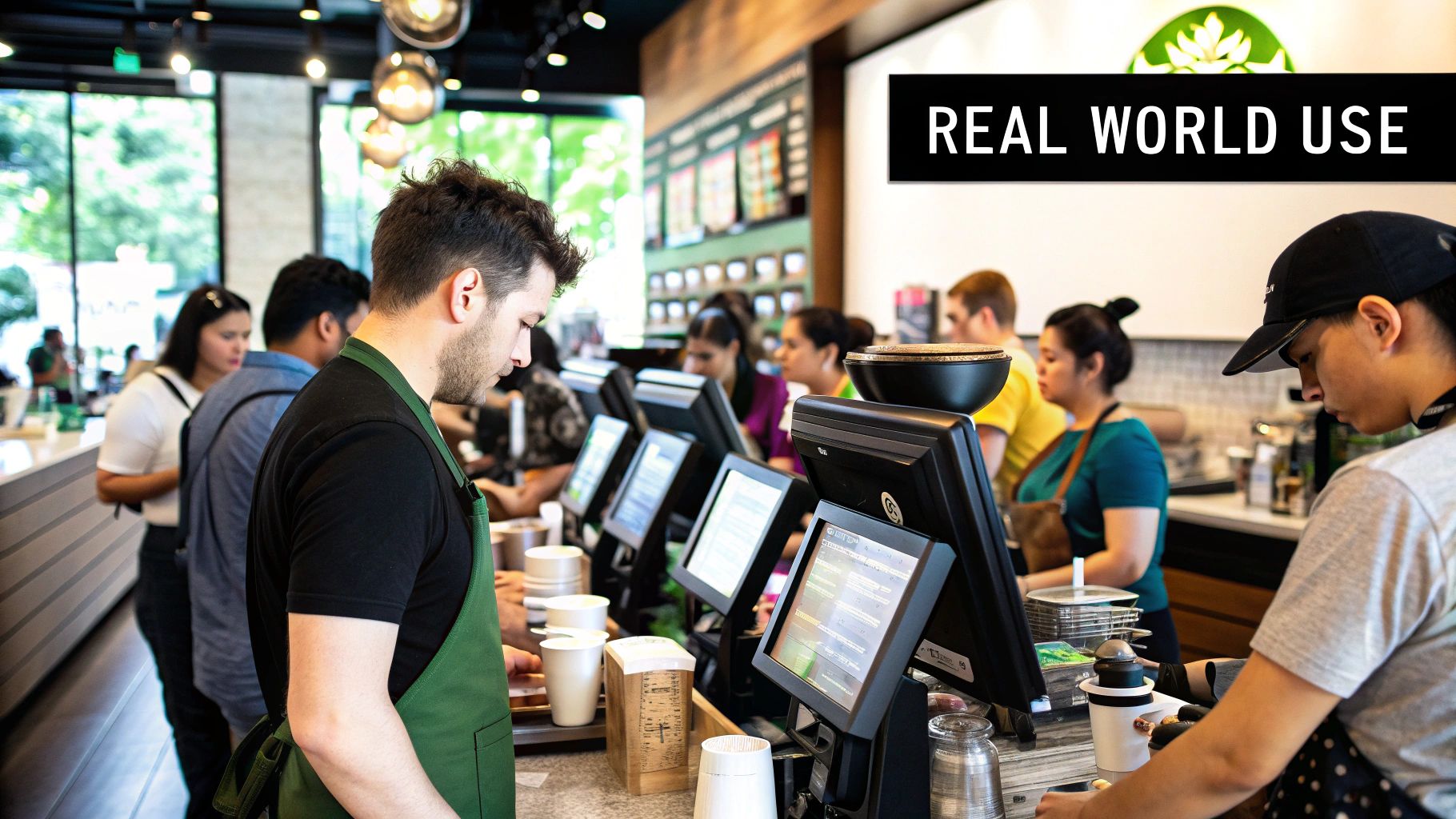
Here are a couple of real-world examples showing how these systems solve genuine business challenges, turning abstract features into real profits and much smoother workflows.
Practical Case One: A Bustling Sydney Café
Picture a popular café in Sydney, where the queue for the morning coffee rush seems endless. Their problem isn’t just about speed; it’s about managing a hybrid business model. They’re juggling dine-in customers, takeaway orders, and a retail shelf selling their own branded coffee beans and brewing gear.
Here’s how their POS system becomes the unsung hero:
- Integrated Order Flow: The system acts as the central nervous system. Orders punched into front-of-house tablets are fired instantly and accurately to both the kitchen display systems (KDS) and the barista screens. This alone can slash verbal miscommunications and errors by an estimated 20% during peak hours.
- Unified Commerce: They chose a POS with a native Shopify integration. When a customer buys a bag of coffee beans at the counter, the inventory on their online store updates in real-time. This prevents overselling online and keeps stock levels accurate across the board.
What was once just a till has become a powerful commerce hub, effortlessly managing different revenue streams without piling on the admin work.
Practical Case Two: An Innovative Adelaide Restaurant
Now, let’s head to Adelaide and look at a modern restaurant offering a fine-dining experience while also running a successful online meal kit service. Their needs are far more complex, demanding sophisticated table management and a seamless e-commerce link for their at-home product line.
The right POS system doesn’t just process sales; it actively orchestrates the guest experience. From the moment a table is booked to the final payment, every interaction is an opportunity to impress, and technology is the tool that makes it possible.
Their system is set up to handle intricate floor plans, track table turnover times, and manage complex split bills without a hitch, ensuring guests can leave smoothly. For their online store, they needed something more specific. Through specialised software development in Sydney and Adelaide, their POS was custom-linked to their WooCommerce site. This allows them to manage meal kit stock, handle online payments, and schedule pickups all from one central system.
For businesses with truly unique models that don’t fit into a pre-built box, a custom Odoo implementation in Sydney, Adelaide can offer an even deeper level of control, building a solution tailored precisely to their operations.
These examples make it clear: the best POS system is the one that solves your biggest operational headaches. Ready to see how the right technology can transform your restaurant? Contact Wistec today for a personalised consultation.
Putting Your New POS System to Work
Picking the right POS system is a huge step, but the real work—and the real payoff—begins with implementation. A thoughtful rollout is what turns a smart purchase into a game-changing asset for your restaurant. It’s about more than just plugging things in; it’s about weaving the new system into the very fabric of your daily operations.
A practical case for this is a restaurant in Sydney that, during its menu migration, discovered two of its most popular dishes had incorrect costings. By refining the data as they implemented the new POS, they instantly improved the profitability of those items. It’s about using the transition as a chance for a full operational health check.
Nailing the Switch
A smooth changeover hinges on a clear, practical plan that considers both the tech and the people. So many restaurants stumble by focusing only on the hardware and forgetting that their team needs to feel confident using it.
Here’s a simple checklist to get you started:
- Map Out Your Data: Plan how you’ll move every menu item, ingredient, and customer profile. Don’t just dump it across; clean it up and verify everything before you even think about going live.
- Plan Your Floor: Before anything arrives, walk through your restaurant and map out the ideal spot for every terminal, printer, and kitchen display. Check your Wi-Fi signal and power access in those spots to avoid any day-one headaches.
- Train, Train, and Train Again: Don’t just show staff how to take an order. Run them through everything: splitting bills, handling refunds, looking up stock levels, and adding customer notes. Make sure you schedule sessions for all your different shifts so no one gets left behind.
When You Need More Than an Out-of-the-Box Solution
For many restaurants, the standard POS is just the beginning. If you’ve got a custom-built loyalty app, a specific accounting package, or a busy online store, you need your POS to talk to everything else you use. This is where professional integration makes all the difference.
Your POS shouldn’t be an island. Its true power is unlocked when it syncs seamlessly with all your other business tools, creating one central hub for your entire operation.
For instance, that amazing local loyalty program you’ve built won’t do much good if it doesn’t automatically connect with your POS. This is where bringing in experts in software development in Sydney and Adelaide can bridge the gap, building custom links that make your systems work together effortlessly. For larger venues with more complex needs, a bespoke Odoo implementation in Sydney or Adelaide can create a fully unified business system, connecting your POS to everything from inventory to accounts. This ensures your Shopify implementation or WooCommerce store always shows accurate, real-time stock, keeping online customers happy.
Ready to plan a POS rollout that’s built around your restaurant’s specific needs? Get in touch with the Wistec team today for a strategic consultation.
So, How Do You Choose With Confidence?
Alright, we’ve laid out the features, run through the comparisons, and walked through a few real-world scenarios. You should now have a much clearer picture of what the best restaurant POS system looks like for your venue. This is the part where all that research pays off, helping you move from browsing options to making a confident choice that will anchor your business for years to come.

Ultimately, the right decision comes down to your venue’s unique DNA. A brand-new café just needs a reliable, all-in-one system that won’t break the bank. An established restaurant group, on the other hand, is going to need sophisticated, multi-location analytics to drive its strategy forward.
Asking The Right Questions Before You Commit
Before you sign on the dotted line, it’s time for a final gut check. Run through these crucial questions and be honest about what your restaurant truly needs.
- Does it match your service style? A practical case is a quick-service spot in Adelaide that chose a POS with a customer-facing display. This sped up their ordering process by 25% because customers could confirm their own orders, reducing errors. The system’s workflow has to feel natural.
- What’s your five-year plan? Think bigger. Will this POS grow with you, or will you outgrow it in a year? Make sure it can handle multiple locations, integrate with future online ordering platforms like WooCommerce or a Shopify implementation, and deliver the complex reporting you’ll need as you scale.
- How well does it play with others? Does it connect seamlessly with the software you already rely on? If not, you might need a hand. A custom Odoo implementation in Sydney, Adelaide, can tie your entire operation together, while specialised software development in Sydney, Adelaide, can build those vital bridges between your systems.
A POS system is a long-term partnership. Your final choice should feel less like a purchase and more like hiring a critical new member of your team—one that’s reliable, efficient, and ready to grow alongside you.
Ready to find a system that fits your business perfectly and elevates your operations?
Contact our experts today for a personalised consultation on your POS and integration needs. We’ll help you decide with total confidence.
Got Questions? We’ve Got Answers
Picking the right tech for your restaurant is a big decision, and it’s natural to have a few questions swirling around. Let’s tackle some of the most common ones we hear from restaurant owners just like you.
What’s The One POS Feature A New Restaurant Absolutely Cannot Skimp On?
For a brand-new restaurant, nothing beats ease of use and reliability. You simply can’t afford a system that’s clunky or crashes during the dinner rush. A practical case is a new Sydney food truck that used Square’s intuitive interface to train staff in under an hour, allowing them to focus on serving customers instead of fighting with technology on their opening day.
Right alongside that is solid reporting. You need to know what’s selling, what’s not, and where your money is going from the moment you open your doors. And of course, think ahead – make sure the system you pick today can grow with you tomorrow.
What Should I Realistically Budget For A Restaurant POS System In Australia?
POS system costs can be all over the map, but they generally break down into three main parts.
- Monthly Software Subscription: This is your ongoing fee, usually starting from around $70 AUD per month for a basic plan.
- Payment Processing Fees: This is a slice of every transaction. You should plan for somewhere between 1-2%.
- Hardware Bundles: The physical gear—terminals, printers, cash drawers—can set you back anywhere from a few hundred to a few thousand dollars upfront.
Here’s a pro tip: Always ask for a fully itemised quote. Get everything in writing—software, hardware, payment fees, and any sneaky setup or support costs—so there are no nasty surprises down the line.
How Much of a Headache Is It to Connect a POS With My Other Software?
Thankfully, it’s usually not much of a headache at all. Most modern, cloud-based POS systems are built to play nicely with others. They often come with ready-made integrations for popular accounting tools like Xero and e-commerce platforms like Shopify or WooCommerce.
But what if you have a more specific need or an older piece of software you rely on? That’s when you might need a bit of expert help. A custom software development in Sydney, Adelaide can build the perfect bridge between your systems, making sure everything communicates flawlessly. For those wanting everything under one roof, an Odoo implementation in Sydney Adelaide can centralise your entire operation.
Ready to find a POS system that actually simplifies your life and helps you grow? The team at Wistec specialises in custom software solutions. From seamless integrations to full-scale ERP implementations, we make sure your technology fits your business, not the other way around.